
The Retrofit Reality
The Retrofit Reality: Why the Digital Future of Defense Mobility Starts with the Existing Fleet
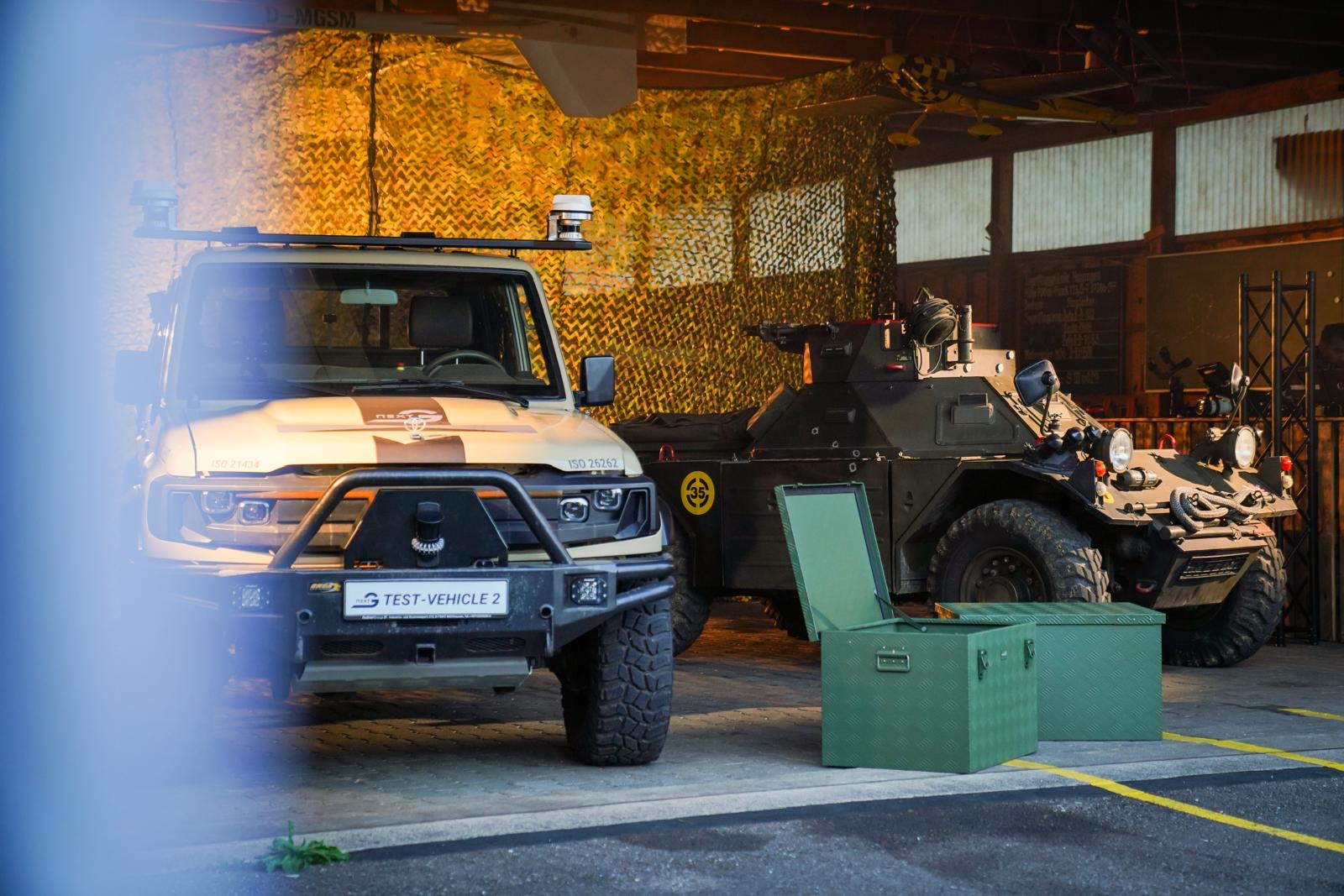
A platform doesn’t have to be new to become digitally controllable.
Military vehicles often remain in service for decades. During this time, however, their missions change: teleoperation, autonomous driving functions, and new operating concepts present challenges that were not yet a factor in the original development of many platforms.
The crucial question, therefore, is not just: What capabilities will the next generation of vehicles have? At least as important is the question: How can new digital capabilities be integrated into vehicles that are already in service today and will continue to be operated for many years to come? This is exactly where retrofitting comes in. A retrofittable drive-by-wire architecture can open up existing platforms to new control and automation functions—without having to redesign the entire vehicle.
Modernization Is Not a Transitional Issue
The global market for upgrades and retrofits of armored vehicles was valued at approximately $6.46 billion in 2025. Growth of about 4.5 percent is expected for 2026. Behind this lies a fundamental need: Existing fleets must be used for longer while also being adapted to new technical requirements. But today, retrofitting means far more than simply replacing individual components. With the integration of digital communication, new sensor technology, teleoperation, and autonomous functions, the way a vehicle is controlled is also changing. As a result, the control architecture itself becomes a central component of modernization.
Why retrofitting is particularly challenging from a technical standpoint
In a newly developed vehicle, the electrical system, bus systems, actuators, and control units can be designed together from the outset. Digital controllability is then an integral part of the original vehicle architecture. With an existing platform, the starting point is different. The new control system must interface with existing electrical systems, existing vehicle electrical networks, vehicle-specific communication structures, and mechanical or hydraulic actuation systems.
Depending on the target platform, this means that actuators, sensors, electronic signal paths, and interfaces to the steering, braking, and powertrain systems—among other components—must be integrated. At the same time, the overall system must be capable of defined responses to faults and must not be dependent on a single connection, power supply, or control source.
The challenge, therefore, is not simply to demonstrate a digital function on a single demonstrator. What is crucial is the ability to reuse a safety-critical control core across different vehicle types—with platform-specific integration in each case. This is precisely where a standalone solution differs from a scalable retrofit architecture.
What a retrofittable control architecture must deliver
Heterogeneous fleets consist of wheeled and tracked vehicles, different weight classes, various drive types, and multiple platform generations. A retrofit architecture must account for these differences without having to start from scratch technically for each vehicle. This requires a reusable control core and clearly defined interfaces to the respective platform. The connection can utilize established vehicle communication protocols such as CAN, but its specific implementation always depends on the target system.
Redundancy must also be considered as part of the overall system. If a control function that was originally mechanical is now performed electronically, signal transmission, actuators, sensors, communication, and power supply must be designed so that a single failure does not lead uncontrollably to a loss of vehicle control. Retrofit is therefore not merely an interface task. It is system integration under real-world constraints.
How NX NextMotion Contributes
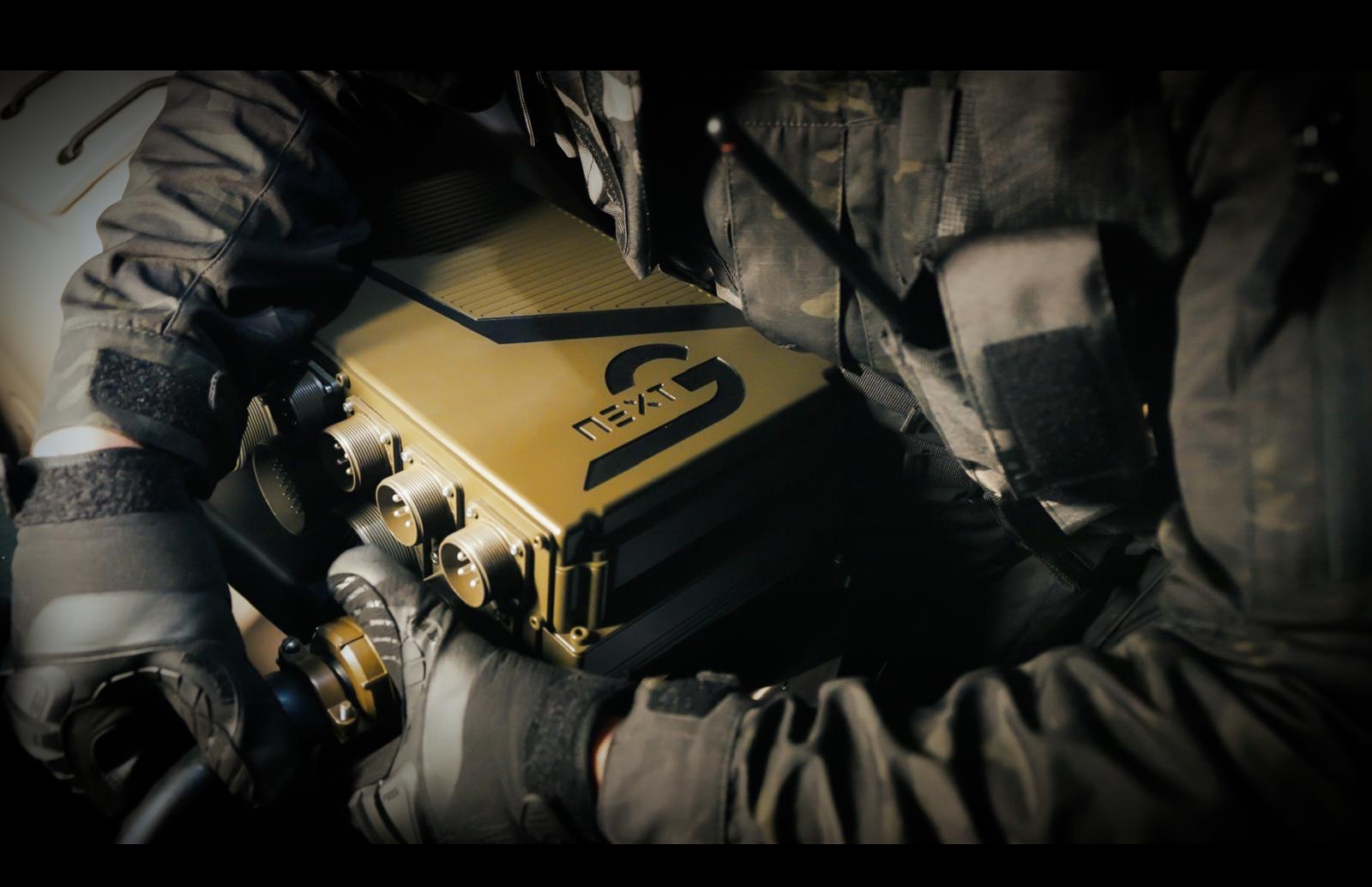
NX NextMotion was developed as an open, manufacturer-independent drive-by-wire platform. Its safety-critical control core is not tied to a single vehicle class or drive type and can be integrated into various wheeled and tracked vehicles with diesel, hybrid, or electric drives.
However, reusability does not replace platform-specific adaptation. Each vehicle requires its own technical integration and evaluation. The advantage lies rather in the fact that a completely new control architecture does not need to be developed for every target platform.
To this end, NX NextMotion brings to the integration process an architectural foundation that has already been developed in accordance with relevant safety and cybersecurity requirements. However, the specific certification and overall vehicle assessment always depend on the target platform, the scope of integration, and the intended operational context. Retrofittability is thus a characteristic of the architecture—not a universally transferable vehicle certification.
From a Single Vehicle to a Modernizable Fleet
The true benefit of retrofitting is not evident in a single retrofitted vehicle. It arises when the same technical approach can be applied across multiple platform types. Then, an isolated integration project becomes the foundation for the gradual modernization of a heterogeneous fleet.
Such an architecture can pave the way for teleoperation, autonomous functions, and new operating concepts. It makes it possible to introduce new capabilities where they are actually needed: in the vehicles that are already available. Thus, drive-by-wire does not merely change how a vehicle is controlled; it transforms an operator’s ability to further develop its fleet over the remainder of its service life.
Outlook
Retrofitting has clarified how existing platforms can, in principle, be opened up to digital control functions. But what happens when the driver is no longer in the vehicle? What feedback does a remote operator need? And how must a control system react when the direct human fallback is no longer available? The next article explains why precise teleoperation demands far more than simply transmitting steering and braking commands.
We control what moves.
Source:
Armored Vehicle Upgrade and Retrofit Market Report 2026, Research and Markets.