
Regulatory milestone meets system maturity: Remote control regulation in force – NX NextMotion already approved for road use

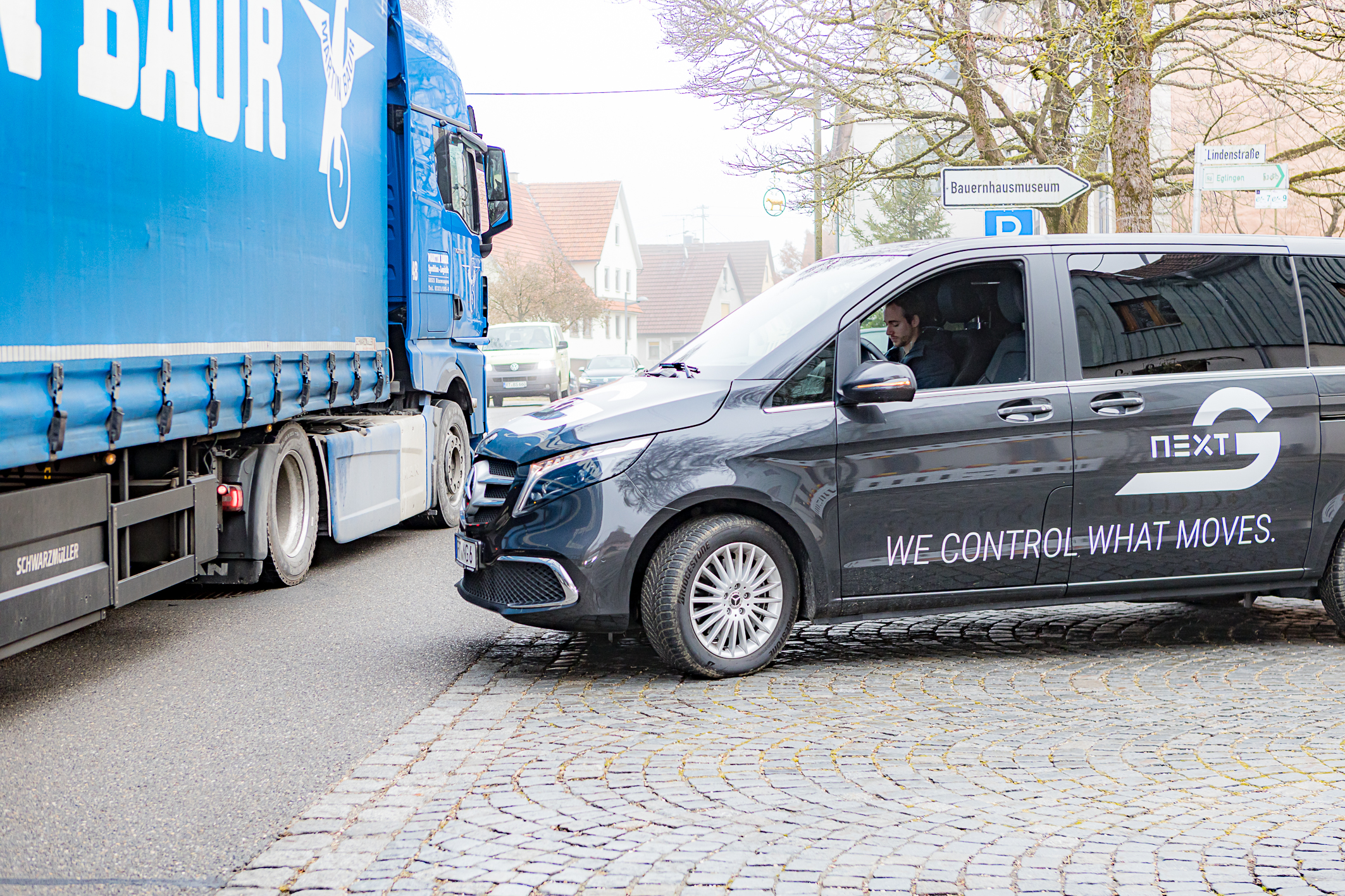
Remote-controlled driving in a real-world environment: An NX NextMotion-equipped V-Class test vehicle travels independently on public roads. It is controlled from a control centre via a multi-redundant drive-by-wire system that controls steering, braking and propulsion. Photo: Arnold NextG
The legal definition of teleoperation on public roads has been established for the first time. Arnold NextG's NX NextMotion drive-by-wire system delivers a certifiable control platform for remote operation under real-world conditions.
Pfronstetten-Aichelau, 4 December 2025 – The Remote Control Regulation, which came into force on 1 December 2025, created a binding legal framework for the first time that allows vehicles to be operated remotely on public roads. This establishes the regulatory basis for a mobility model that combines autonomous driving functions, assistance systems and remote control in a systematic way.
What has now been defined at the political level has long been a technological reality. Arnold NextG's NX NextMotion drive-by-wire system is fully multi-redundant and fail-operational, and already meets all the relevant certification requirements for road traffic, including ASIL D, SIL 3, ISO 21434, UNECE R79 and FMVSS 126. The platform is homologatable and is already in use in pilot fleets under real-world conditions, putting it technologically ahead of the current regulatory framework.
Drive-by-wire is a prerequisite for safe teleoperation.
Teleoperation, or the remote control of vehicles by human operators, is a key component on the road to highly automated mobility. However, as a transitional technology between assisted driving and fully autonomous systems, specific demands are placed on vehicle architecture. Safety-critical functions such as steering, drive and brakes must be electronically controllable and have multiple redundancies to ensure they remain fully functional in the event of a fault.
Drive-by-wire systems such as NX NextMotion provide the necessary basis for this. They replace mechanical connecting elements with digital signal processing and enable direct connection to control centres. At the same time, they meet the high requirements for functional safety and cybersecurity. Only with such an architecture can a vehicle be reliably controlled remotely, whether it is a shuttle in city traffic, a tractor in rural areas or a logistics vehicle in a mixed scenario.
“Our platform enables complete control over steering, drive and brakes — fully electronic, fail-operational and certifiable according to the world's highest safety standards,” says Kevin Arnold, CEO of Arnold NextG. “This provides the technological foundation for the safe use of teleoperated vehicles in public spaces.”
Relevant areas of application: Robot taxis and agriculture.
From highly automated shuttles in urban areas and teleoperated logistics trucks in factory traffic to tractors en route to the next field, an increasing number of mobility solutions are relying on hybrid architectures that combine autonomous functions with remote control. This principle was demonstrated at Agritechnica 2025. In collaboration with the Rheinmetall Technology Centre and MIRA GmbH, Arnold NextG presented a near-production tractor capable of autonomous field work and remote control for road transport from a control centre — a project funded by the IPCEI-CIS initiative that impressively demonstrates the technological feasibility of such systems.
This form of functionally divided mobility — autonomous where the environment is controllable and remote-controlled where legal or operational conditions require intervention — is becoming increasingly important in a growing number of applications. It provides a practical solution for real-world operating conditions while also highlighting the importance of a secure, end-to-end digital control architecture that enables autonomous and manual intervention at any time.
Although driverless operation in complex mixed traffic, such as inner-city robot taxi concepts, is currently predominantly in the pilot stage, it is already evident that, without a robust, certified drive-by-wire foundation, this form of mobility cannot be scaled or operated safely. NX NextMotion addresses precisely this interface, as it is a fail-safe platform designed for both fully autonomous operation and teleoperation, which can be flexibly adapted to a wide variety of application scenarios.
Classification and significance of the regulation.
The new Remote Control Regulation, introduced by the Federal Ministry of Digital and Transport (BMDV), establishes clear rules for the operation of teleoperation systems in road traffic for the first time. The regulation covers responsibilities, technical requirements, safety standards and the interaction between vehicles and control centres, marking a paradigm shift in mobility regulation. For providers such as Arnold NextG, this is confirmation and a signal to start developing new applications, especially in the following areas:
- Logistics and intralogistics: Remote monitoring of transport fleets during shunting or night operations, for example.
- Public transport and robotaxis: – Safe operation of driverless shuttles with teleoperator backup.
Agriculture & construction: Teleoperation as a bridge between farms, construction sites and fields.
What lies ahead
The enactment of the Remote Control Ordinance, coupled with the technical maturity of NX NextMotion, will create a market environment in 2025/26 where legal requirements and system availability converge for the first time. The new regulation builds on the existing legal framework for automated vehicles (AFGBV) by providing a clear definition of remote operation. This paves the way for applications that have previously been tested mainly in pilot projects or on non-public land.
The NX NextMotion platform has been specifically developed for such application scenarios. Designed not only for autonomous vehicle operation, it also facilitates the secure and scalable integration of teleoperation solutions, including standardised interfaces for AD stacks, control centre connectivity and remote diagnostics. Arnold NextG thus provides the technological infrastructure on which regulatory innovation can be implemented in practice.
"Teleoperation places special demands on safety, availability, and interaction," says CEO Kevin Arnold. "With NX NextMotion, we aim to facilitate this transition from a technical standpoint and, ideally, accelerate it."

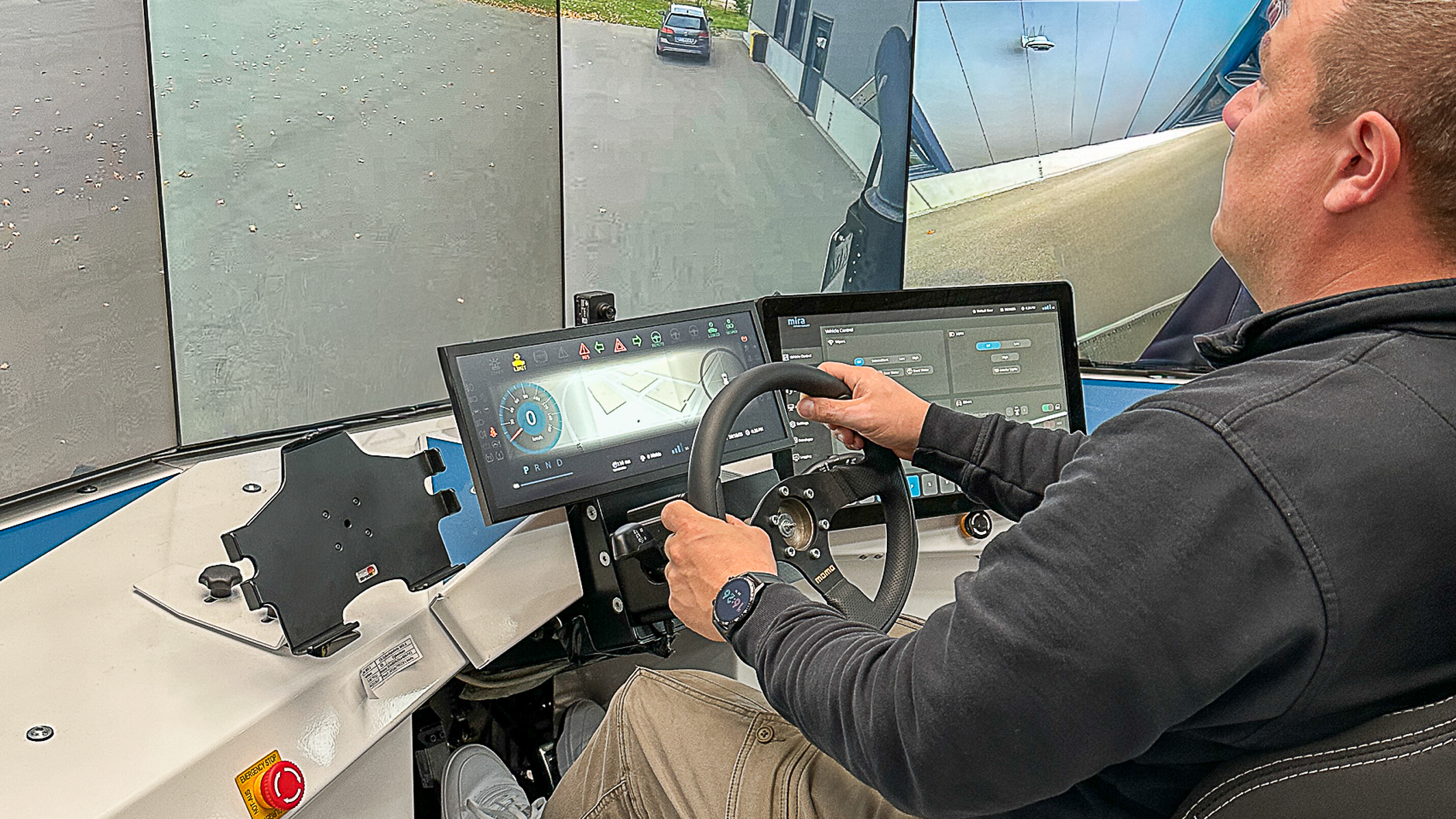
Real-world teleoperation: An operator controls the vehicle from the control centre via multiscreen visualisation, sensor feedback and a digital cockpit. This is made possible by the NX NextMotion drive-by-wire system from Arnold NextG. Photo: Arnold NextG

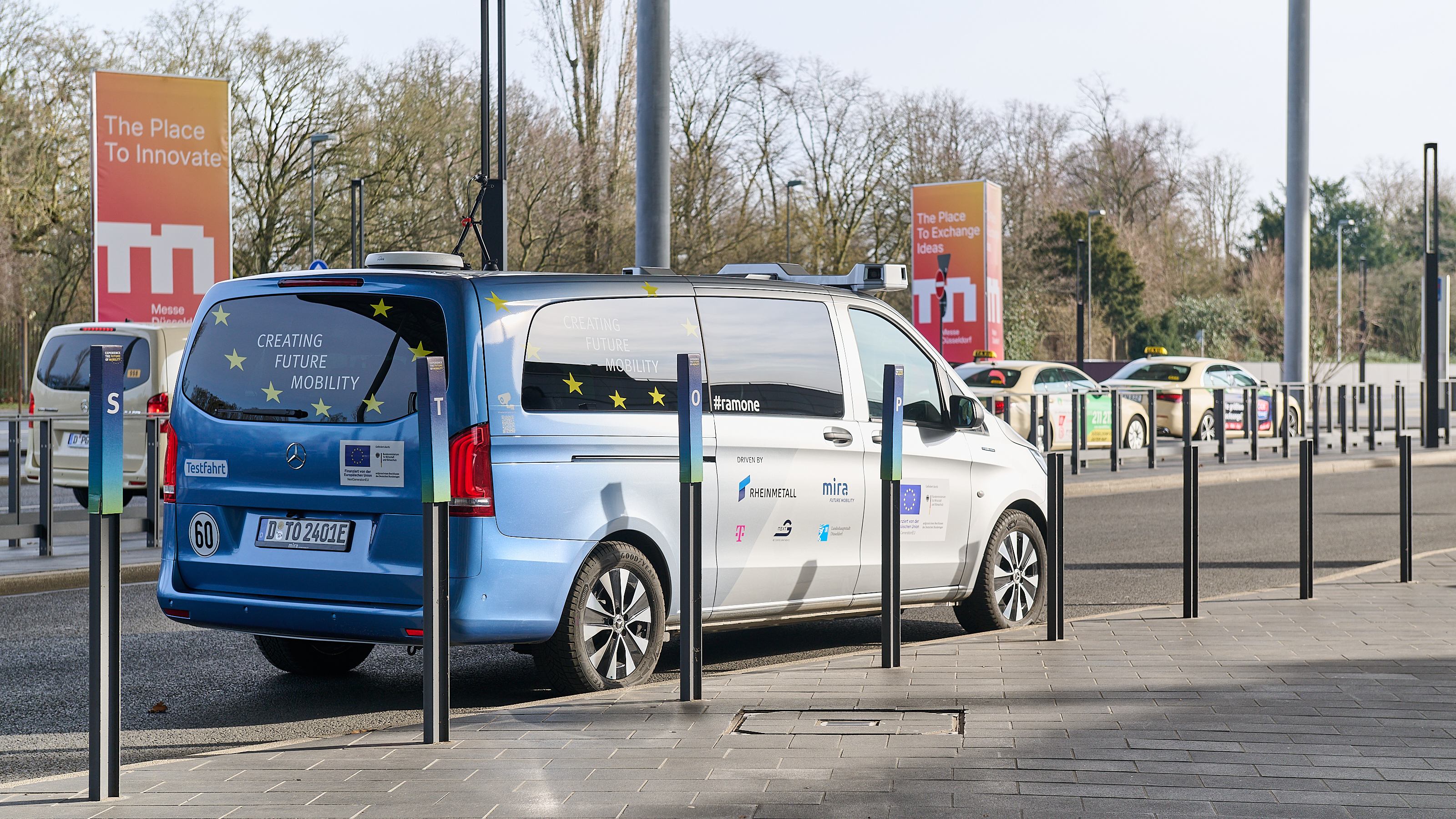
Teleoperation demonstrator in a road environment: The vehicle, which was developed jointly with Rheinmetall and MIRA, is equipped with drive-by-wire technology and was presented as part of the IPCEI-CIS project for remote control on public roads. Photo: MIRA/XPonential2025

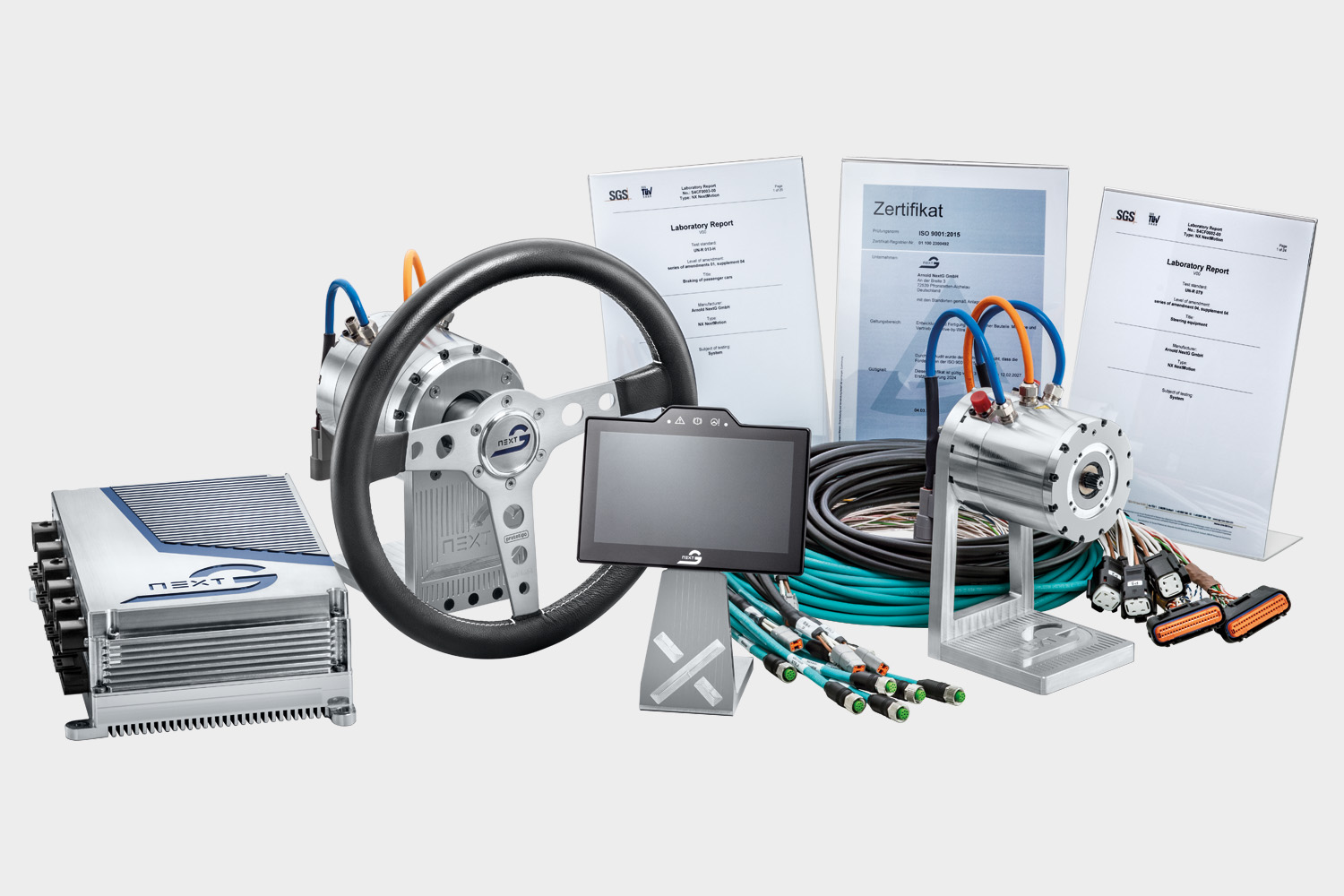
Certified drive-by-wire system: The NX NextMotion system comprises a control unit, actuators and interfaces, and has been developed for use in autonomous and teleoperated vehicles in the event of a failure. Photo: Arnold NextG
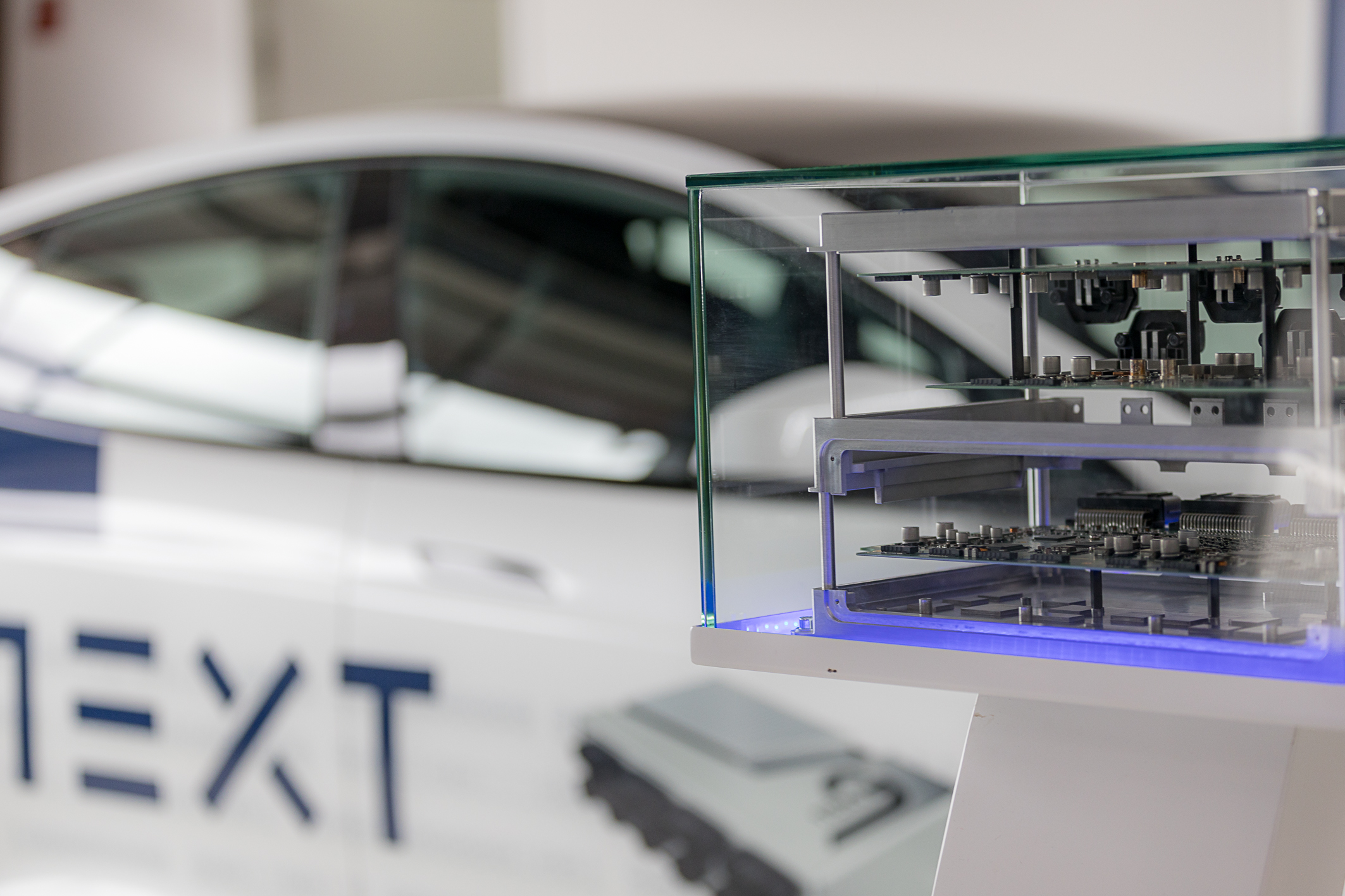
Multi-level system architecture: An insight into the structure of the central control unit of the NX NextMotion platform, which was developed for highly secure drive-by-wire applications in autonomous and teleoperated vehicles. Photo: Arnold NextG GmbH

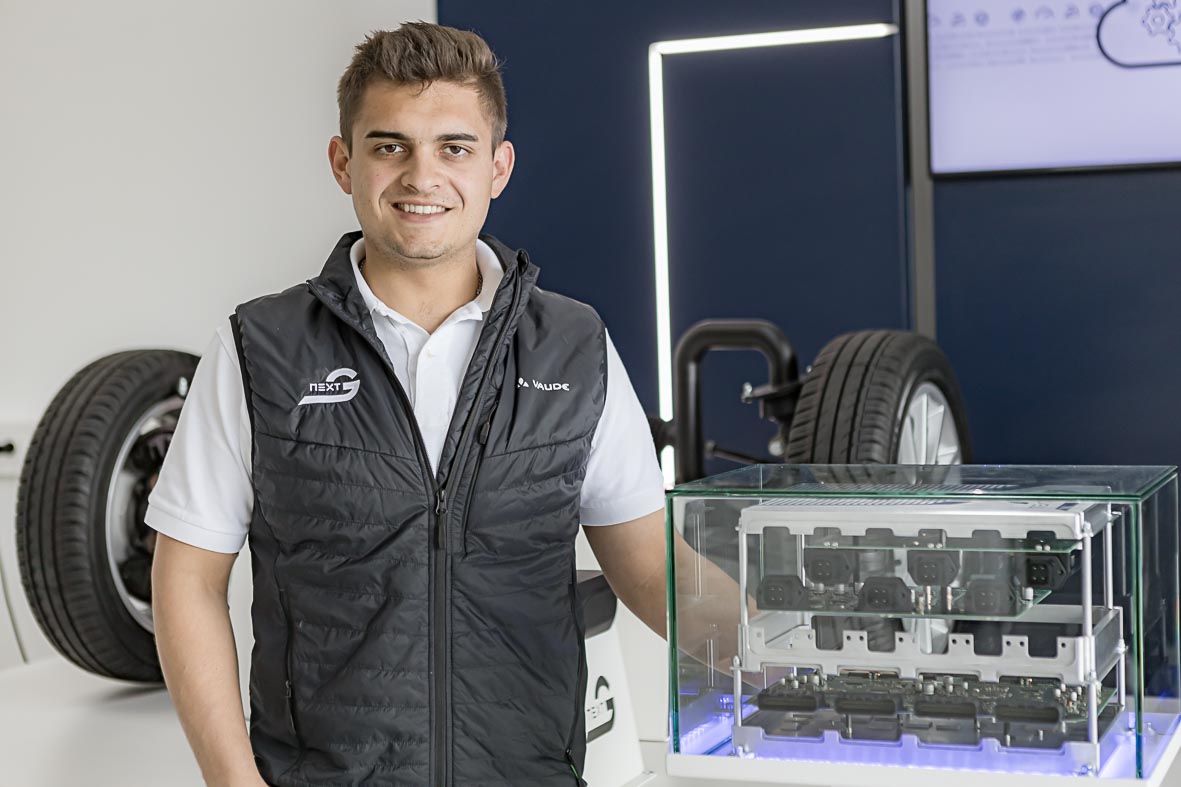
Kevin Arnold, CEO of Arnold NextG GmbH, stands with the central control unit of the NX NextMotion platform, which is the key technology for safely bringing applications such as teleoperation and autonomous driving functions to the road. Photo: Arnold NextG
About Arnold NextG:
Arnold NextG pioneers tomorrow's Safety-by-Wire® technologies. Its highly redundant central control unit, NX NextMotion, enables secure and flexible implementation across any vehicle platform – globally unique in design. The system supports the safe deployment of autonomous vehicle concepts in compliance with the latest hardware, software, and safety standards. From remote control to teleoperation and platooning, Arnold NextG develops and delivers solutions from concept to road approval. With NX NextMotion now certified for road use, Arnold NextG is setting the global standard in drive-by-wire systems.

PM_20251202_Fernlenkverordnung_EN.pdf